

How Many Amps Does 12 Volt Relay Draw
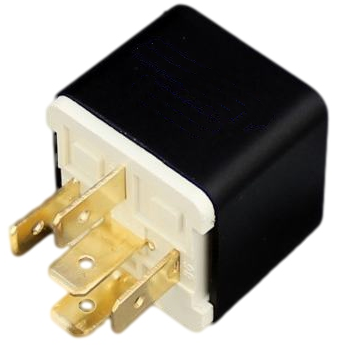
Relay Guide Overview What is a relay? A relay is essentially a switch that is operated electrically rather than mechanically. Although there are various relay designs, the ones most commonly found in depression voltage auto and marine applications are electro-mechanical relays that piece of work by activating an electromagnet to pull a set of contacts to make or suspension a circuit. These are used extensively throughout vehicle electrical systems. Why might I want to use a relay? In that location are several reasons why y'all might want or need to use a relay:
This is the almost common reason and useful where an in-line switch or the existing circuit does not have the chapters to handle the current required. For example, if you lot wanted to fit some high ability work lights that come on with the headlights simply there is a risk that they would exceed the capacity of the existing loom.
High electric current capacity wiring and switches toll more than than lower current capacity versions, so by using relays the requirement for the more expensive components is minimised.
You can utilize a single input from 1 function of an electrical system (e.thousand. central locking output, manual switch etc.) to actuate i or more relays that then complete i or more than other circuits and so carry out multiple functions from one input signal.
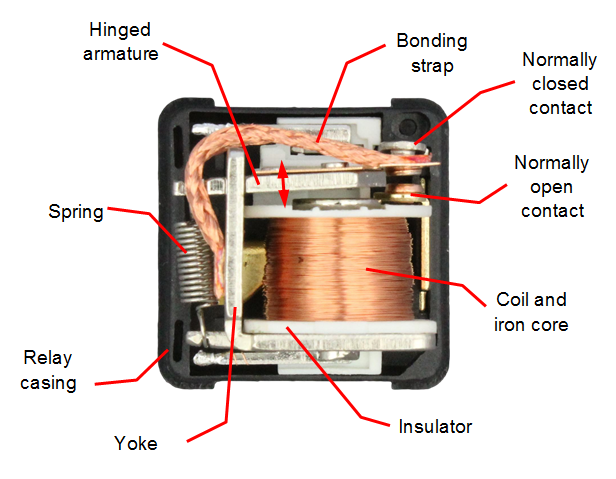
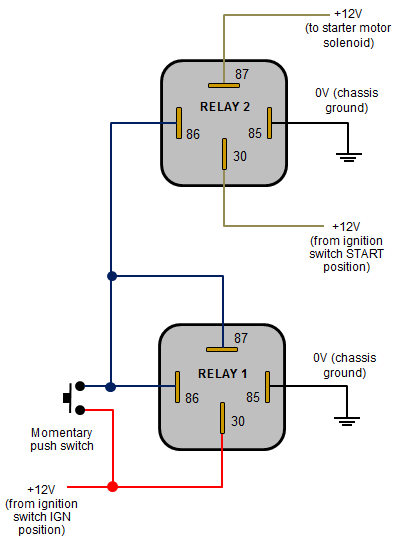
Electromagnetic relays can exist put to some quite clever (and complex) applications when linked up to perform logical operations based on sure inputs (for case, latching a +12V output on and off from a momentary input, flashing alternative left and right lights etc.). Although these logical functions have now been superseded by electronic modules for OEM designs, information technology can even so be useful, fun and often more cost effective to use relays to perform them for some after-market place projects (particularly where yous accept a bespoke application). Annotation: In this article we are going to focus on ISO mini or 'standard' relays which have a 1" cube body and are the most ordinarily used in vehicle electric systems. Structure and operatio n Within a relay This is what the inside of an ISO mini relay looks similar:
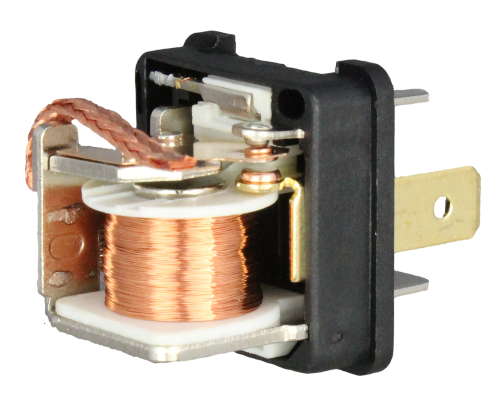
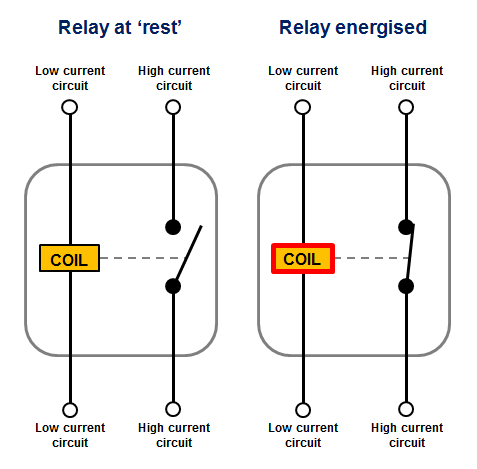
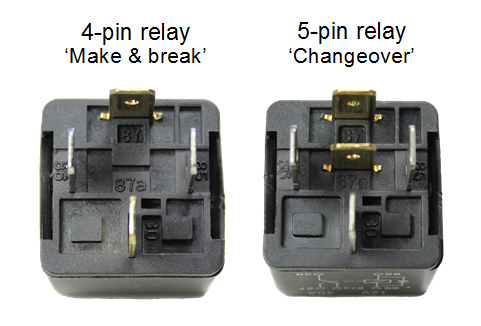
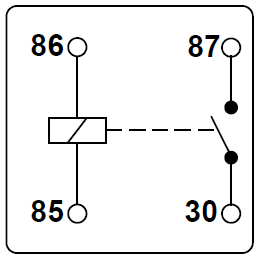
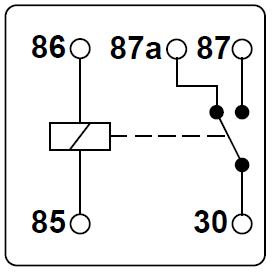
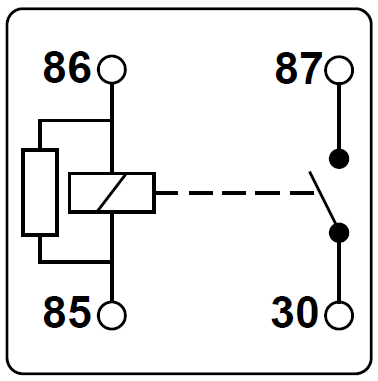
A copper gyre around an atomic number 26 cadre (the electromagnet) is held in a frame or 'yoke' from which an armature is hinged. One end of the armature is connected to a tension leap which pulls the other end of the armature upward. This is the relay in its de-energised state or 'at residue' with no voltage practical. The braided bonding strap provides a good electrical connexion betwixt the armature and yolk, rather than relying on contact between the armature pivot point lonely. The curl and contact (or contacts) are then continued to various terminals on the outside of the relay body. How they work When the coil is supplied with voltage a magnetic field is generated around information technology which pulls the hinged armature downward onto the contact. This completes the 'loftier' current excursion between the terminals and the relay is said to be energised. When voltage is removed from the coil terminal the bound pulls the armature back into it's 'at residuum' position and breaks the circuit betwixt the terminals. So by applying or removing power to the coil (the low electric current circuit) we switch the loftier electric current excursion on or off. Note: It is important to empathize that the coil circuit and the current-conveying (or switched) circuit are electrically isolated from one some other within the relay. The coil circuit merely switches the high current excursion on. The following simplified circuit diagram is frequently used to easily understand how a relay operates: Relay terminology The ISO mini relay we have looked at above has 4 pins (or terminals) on the body and is referred to as a make & break relay considering there is ane high current circuit and a contact that is either open or closed depending upon whether the relay is at rest or energised. If the contact is cleaved with the relay at rest then the relay is referred to asUnremarkably Open(NO) and if the contact is closed with the relay at residue then the relay is referred to as Normally Closed (NC). Commonly Open relays are the more common type. ISO mini relays with two circuits, 1 of which is airtight when the relay is at rest and the other which is closed when the relay is energised, have v pins on the body and are referred to as changeover relays. These have 2 contacts continued to a common last. Make & pause relays are besides known every bit Single Pole Single Throw (SPST) and changeover relays equally Single Pole Double Throw (SPDT). This is based on standard switch terminology. There are other contact configurations discussed below but brand & break and changeover relays are the near commonly used. Terminal numbering convention The terminal numberings found on a relay body are taken fromDIN 72552 which is a German automotive industry standard that has been widely adopted and allocates a numeric code to various types of electrical terminals found in vehicles. The terminals on the exterior of a iv or 5 pin mini relay are marked with numbers as shown below:
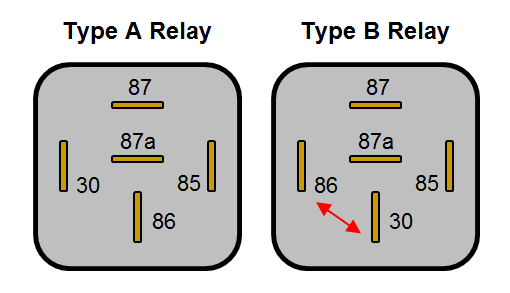
According to DIN 72552 the coil should be fed with +12V to terminal 86 and grounded via terminal 85, notwithstanding in practise it makes no deviation which style effectually they are wired, unless you are using a relay with an integrated diode (meet more info on diodes below). Tip: you can use a changeover relay in place of a make & suspension relay past just leaving either the NO or NC terminal disconnected (depending on whether you want the circuit to be made or cleaved when yous energise the relay). Last layouts The automotive ISO mini relays we accept been looking at above are typically bachelor in ii types of pin layout designated Type A and Type B layouts. These layouts are shown on the two five-pin relays below (pivot 87a not present on four pin relays): You will observe that on the Type B layout pins 86 and 30 are swapped over compared with the Type A layout. The Blazon B layout is arguably easier to work with as the connected terminals are in-line, making the wiring easier to visualise. If you lot demand to supervene upon a relay make sure you use one with the same terminal layout every bit it is easy to overlook if you're not aware of the difference. Final sizes The last widths used on 4 and v pin relays are virtually always six.3mm wide, withal some more specialist relays can take terminal widths of two.8mm, 4.8mm and 9.5mm. The 9.5mm wide terminals tend to be used for higher power applications (such as for starter motor solenoid activation) and the smaller terminals tend to be used for electronics signalling where only very low currents are required. All widths will exist compatible with the standard female blade crimp terminals of the corresponding sizes. Relay body markings Relays can look very like from the outside so they normally have the excursion schematic, voltage rating, current rating and terminal numbers marked on the trunk to identify them.
This shows the basic internal circuits (including any diodes, resistors etc.) and terminal layout to assist wiring.
The operating voltage of the coil and high current circuits. Typically 12V for passenger vehicles and small arts and crafts but too available in 6V for older vehicles and 24V for commercial applications (both auto and marine).
This is the electric current carrying capacity of the high current circuit(s) and is normally between 25A and 40A, however information technology is sometimes shown as a dual rating on changeover relays e.g. xxx/40A. In the case of dual ratings the commonly airtight excursion is the lower of the 2, then 30A/40A, NC/NO for the example given. The current describe of the coil is non normally shown but is typically 150-200 mA with a corresponding coil resistance of around 80-60W. Tip: Knowing the coil resistance is useful when testing the relay for a fault with a multi-meter. A very loftier resistance o r open up excursion reading tin indicate a damaged roll.
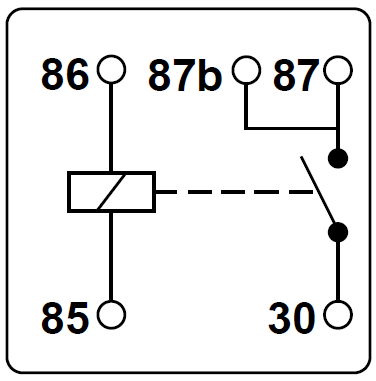
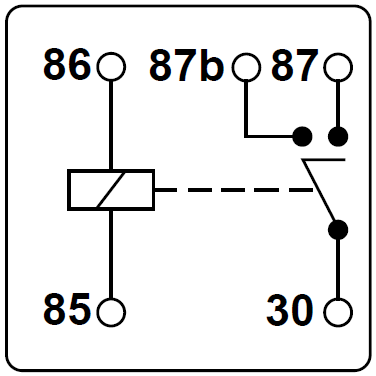
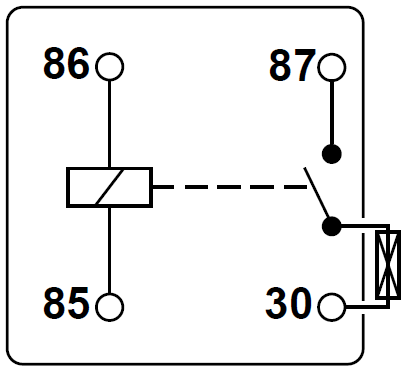
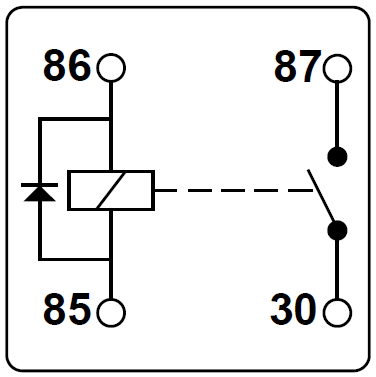
The numbers 85, 86, xxx, 87 & 87a (or other numbers for unlike relay configurations) are normally moulded into the plastic next to each pin and as well shown on the excursion schematic. Relay configurations and types In addition to the basic make & pause and changeover configurations above, ISO relays are available in a number of other mutual configurations which are described in the tabular array below:
* All schematics shown with the relay at rest (de-energised) Micro relays ISO micro relays are, equally the proper name suggests, smaller than ISO mini relays and designed for use in applications where space is at a premium. They are rectangular in section and narrower than a mini relay with a slightly different pivot layout, and are typically bachelor in 'make and break' and 'changeover' configurations, with and without suppression diodes. In addition, the concluding numbering is different, using ane, 2, iii, iv & 5 instead of 30, 85, 86, 87 & 87a.
More complex relay types At that place are other relay designs that are used for some more complex applications in vehicle systems. They are even so based upon the principle of switching college electric current circuits using smaller electric current circuits simply often combine this with electronics to perform special functions: Some examples are:
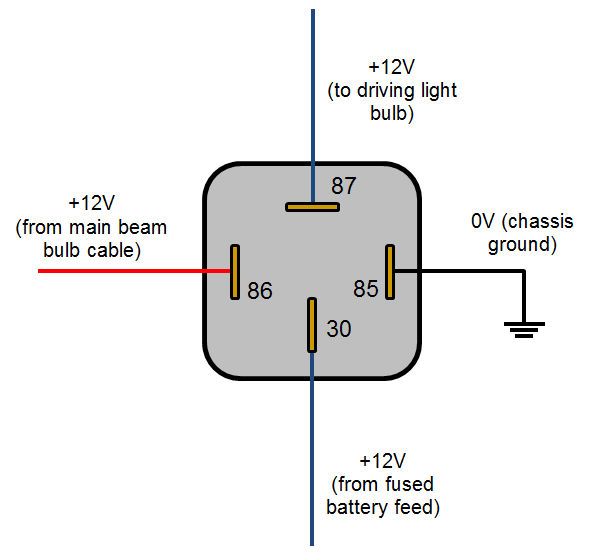
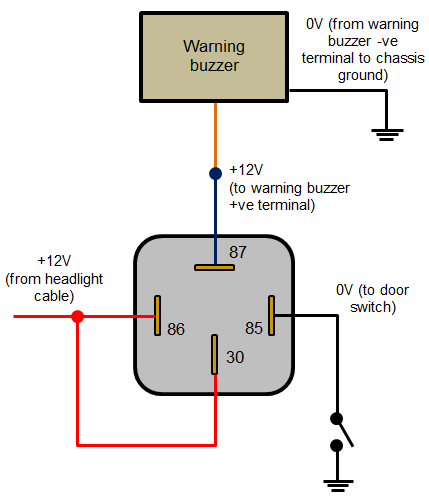
These more than circuitous relays tin accept up to ix pins of various sizes. This increment in the number of terminals over the standard 4 or five in more simple relays is oft necessary because additional connections can be required for the in-built electronics (eastward.g. inputs from sensors or the ECU and outputs to indicator lights or the ECU). Case relay wiring schemes The following diagrams bear witness some common relay wiring schemes that utilize 4 pin ISO mini relays.
Disclaimer The information contained in these articles is provided in skilful faith and we do our all-time to ensure that information technology is accurate and upwards to date, withal, we cannot exist held responsible for whatever harm or loss arising from the use or mis-utilize of this information or from any errors or omissions. The installer is ultimately responsible for the condom of the system and so if you are in whatsoever doubtfulness, please consult a qualified electrician. | Watch our YouTube "how to" guides here Find out well-nigh our Trade Accounts here | |||||||||||||||||||||||||||||||||||||||||||||||||||||||||||||||||||



Source: https://www.12voltplanet.co.uk/relay-guide.html#:~:text=The%20current%20draw%20of%20the,fault%20with%20a%20multi%2Dmeter.
Posted by: williamsblithad.blogspot.com
0 Response to "How Many Amps Does 12 Volt Relay Draw"
Post a Comment